


A UK salon chair typically rents for about £50–£120 a week in rural and small-town areas, rising to £250–£400 in central London, and the figure depends on location and what is included. That spread only makes sense once you know who is setting the rent. The National Hair & Beauty Federation industry statistics put the sector at about 50,400 VAT and PAYE businesses in 2024, with 81% employing fewer than five people and 64% turning over less than £100,000, against roughly £6.1 billion of total turnover. A spare station is often a side income for a micro salon, not a chain product, which is why one town shows a day rate and the next a monthly one. The same booklet recorded 1,240 more hair and beauty businesses that year, a 2.5% rise, so both hosts and renters keep arriving. Treat every quoted salon chair price as a starting label. The comparable number is the cost per day you work.
Table of Contents
- Typical Salon Chair Rent Across the UK
- Day, Week and Month Rates Compared
- Why London Rates Swing by Postcode
- What Else Moves the Rate
- What the Headline Rate Leaves Out
- Chair Rent Versus a Split or Employed Role
- Which Rate Suits Which Professional
- Confirm the Rate and Terms Before You Book
Typical Salon Chair Rent Across the UK
In 2026, weekly UK hairdressing-chair rental benchmarks ran from £50–£120 in rural and small-town locations to £250–£400 in central London, according to Local Brand Hub. City benchmarks from 2025 sit in between those poles: Lyvi reported £200–£350 a week in Manchester and £180–£300 a week in Birmingham. Read the unit on each row before you compare the pounds.
| Location | Rent reported | Period | Source |
|---|---|---|---|
| Rural and small-town UK | £50–£120 | Per week | Local Brand Hub, 2026 |
| Manchester | £200–£350 | Per week | Lyvi, 2025 |
| Birmingham | £180–£300 | Per week | Lyvi, 2025 |
| Glasgow, one listing | £30 | Per day | FindMy.beauty, October 2026 |
| Liverpool (Crosby), one listing | £70 | Per week | FindMy.beauty, October 2026 |
| Belfast, one listing | £70 | Per week | FindMy.beauty, October 2026 |
| Edinburgh City Centre, one listing | £650 | Per month | FindMy.beauty, October 2026 |
| Brighton, one listing | £1,500 | Per month | FindMy.beauty, October 2026 |
The Glasgow, Liverpool, Belfast, Edinburgh and Brighton rows are single live listings as of October 2026, not city averages. Glasgow's only listed figure is £30 a day for a styling, barber or nail space at Chesne Hair & Barbershop. Liverpool's only listed figure is £70 a week for a nail desk at Gemini beauty bar in Crosby. Belfast's only listed figure is £70 a week. Edinburgh's only listed figure is £650 a month for a beauty treatment room in the city centre. Brighton's only listed figure is £1,500 a month for a salon chair at AMOR Hair & Beauty. One listing can be an outlier.
Don't compare mixed periods
A £30 day rate and a £650 monthly rate aren't the same kind of number. Until you convert both to a cost per working day, the smaller headline can be the dearer chair. The table is a starting range. Put your own diary next to each row before you decide a place looks cheap.
Day, Week and Month Rates Compared
London listings on the marketplace run from £50–£150 a day, £125–£450 a week and £400–£2,500 a month. Those three bands are the practical menu, not three versions of one price.
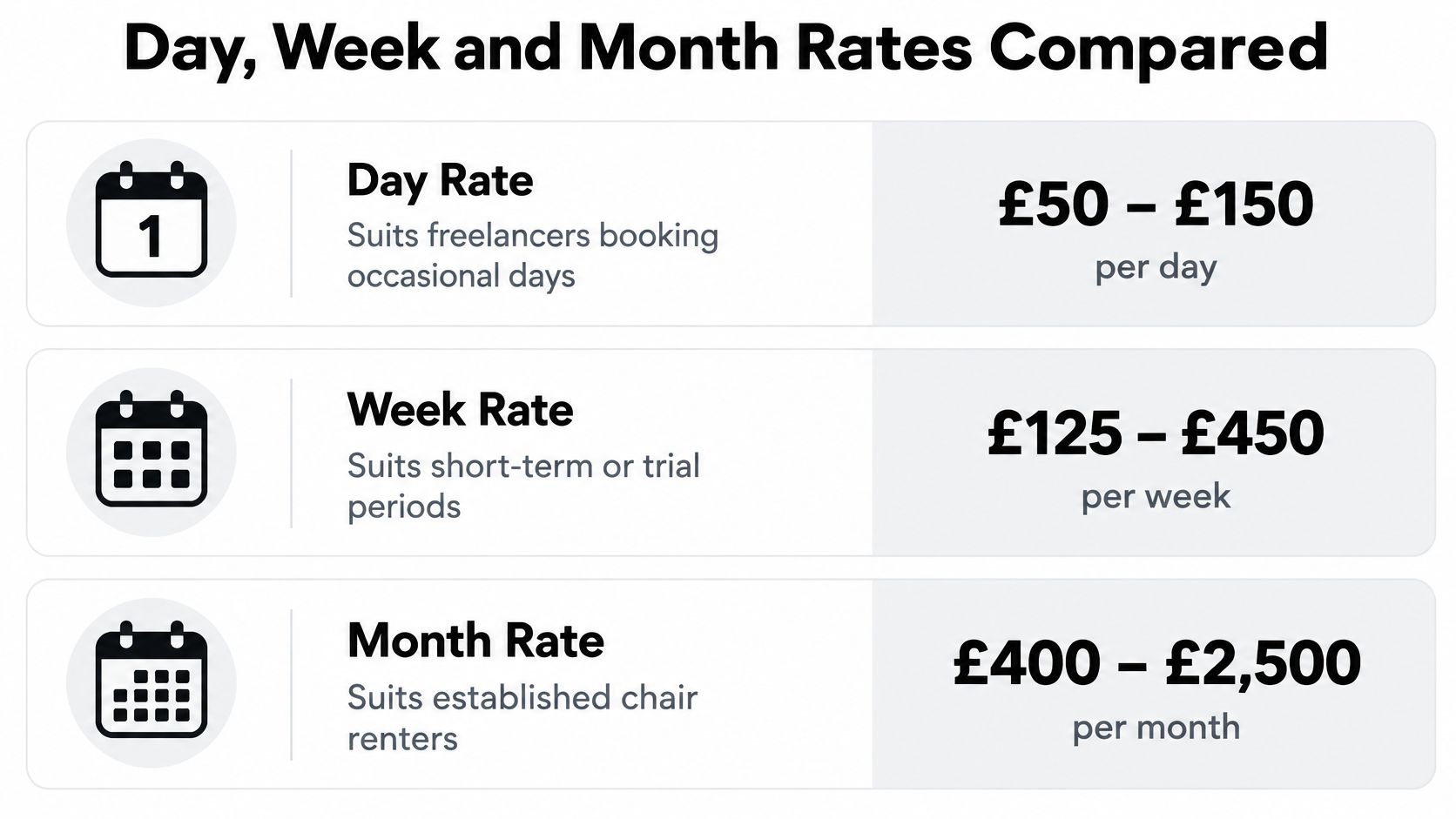
| Rate period | London range listed | Suits |
|---|---|---|
| Per day | £50–£150 | Occasional clients, trial days, guest work |
| Per week | £125–£450 | Part-time stylists with a regular diary |
| Per month | £400–£2,500 | Full-time renters and anyone working most days |
Divide by the days you use
Take a £400 month. Spread across 20 working days, that is £20 a day, well under a £50 day rate. Spread across 8 days, the same £400 is £50 a day, level with the day rate and with none of its flexibility. Write the working days beside the rent before you call a monthly figure a bargain.
A day rate fits a guest colourist or a trial Saturday. You pay only for the day the clients are booked, and you can stop without carrying an empty week. A weekly rate fits a part-time diary that already repeats, three set days rather than a hope of filling the month. A monthly rate fits someone in the chair most weekdays. Leave that chair half empty and each booked day costs more than a flexible day rate would have.
Practical rule: expected working days per month go on the page next to every quote, and the period with the lower cost on those days wins.
The top of the monthly band, £2,500, only works if the book is already dense. At 20 days that is £125 a day before products. At eight days it is more than £300 a day, which is a full London day rate with the days you didn't work still billed.
Why London Rates Swing by Postcode
In 2026, Saachii reported London salon-chair rents at £250–£400 or more a week in prime central areas, £150–£250 in inner boroughs, and £100–£150 in suburban areas. The gap inside one city is as wide as the gap between a small town and a regional centre.
| Zone | Weekly rent reported |
|---|---|
| Prime central areas | £250–£400 or more |
| Inner boroughs | £150–£250 |
| Suburban areas | £100–£150 |
Central chairs cost more because clients can reach them. London's salon spaces sit across the city, with the Tube, Overground and Elizabeth line putting most salons within reach of clients. A suburban chair is cheaper to book and often quieter for walk-ins. You can scan current London salon chairs to rent by postcode and see which band a street sits in.
Cost per booked client
Say a suburban chair is £120 a week and you book six clients. That is £20 of rent on each head before products. A central chair at £300 with fifteen clients is the same £20. Fill the central chair and the higher rent can be the cheaper one per booking. Half-fill the suburban chair, three clients, and the "cheap" week is £40 of rent each.
The same logic holds in Manchester, Birmingham and city-centre Glasgow. Footfall and how long a client will travel set the rate as much as the postcode label. A chair two stops from a main station behaves more like an inner-borough price than a suburb, even when the rent is written as a local figure.
Weekly rent divided by the bookings that chair is likely to secure, times your average take per client, is the test. If rent eats the take before products and tax, the postcode is wrong for that diary.
What Else Moves the Rate
Location is only the first lever. Five others change what you pay, and two listings on the same street can differ for all of them.
The wider price climate matters too. The Office for National Statistics recorded current-price gross value added for hairdressing and personal-grooming establishments at £9,576 million in 2024 and £9,289 million in 2025, a nominal fall of £287 million, about 3.0%, while its price index moved from 100.0 to 103.8. Activity is large, and measured prices were about 3.8% higher. A chair rate has to cover labour, utilities and supplies, not only the salon's own lease.
- Dedicated chair versus shared station. A chair you use alone, and can leave stocked, costs more than a station split with another professional. Sharing cuts the headline and brings double-booking risk plus split products.
- Full room versus a single chair. A beauty room carries its own day rate and should be compared with other rooms, not with a styling chair in an open salon. Styling chairs are stations for stylists and colourists. A private room is a different product.
- Lease length and notice. A longer agreement often buys a lower weekly figure. A week-to-week deal with one week's notice costs more and lets you leave when the diary thins.
- Included services. Basin use, towels, Wi-Fi and booking support inside the rent can beat a lower headline that bills each extra separately.
- Seasonal demand. Pre-Christmas weeks and the summer wedding season fill chairs. Hosts may hold the rate or ask for a longer commitment while demand is high.
Check each driver on the listing before you line two rents up. A shared winter chair with towels included isn't the same offer as a dedicated August chair billed bare.
What the Headline Rate Leaves Out
The advertised chair price isn't the occupancy cost. Independent UK startup guidance on the UK Startup hair and beauty pages places chair rent at roughly £80–£300 a week and beauty-room rent at £50–£120 a day, and it lists utilities, insurance, laundry, consumables and payment fees as further salon costs. Where the salon is VAT-registered, a stated £150 rent may become £180 including VAT.
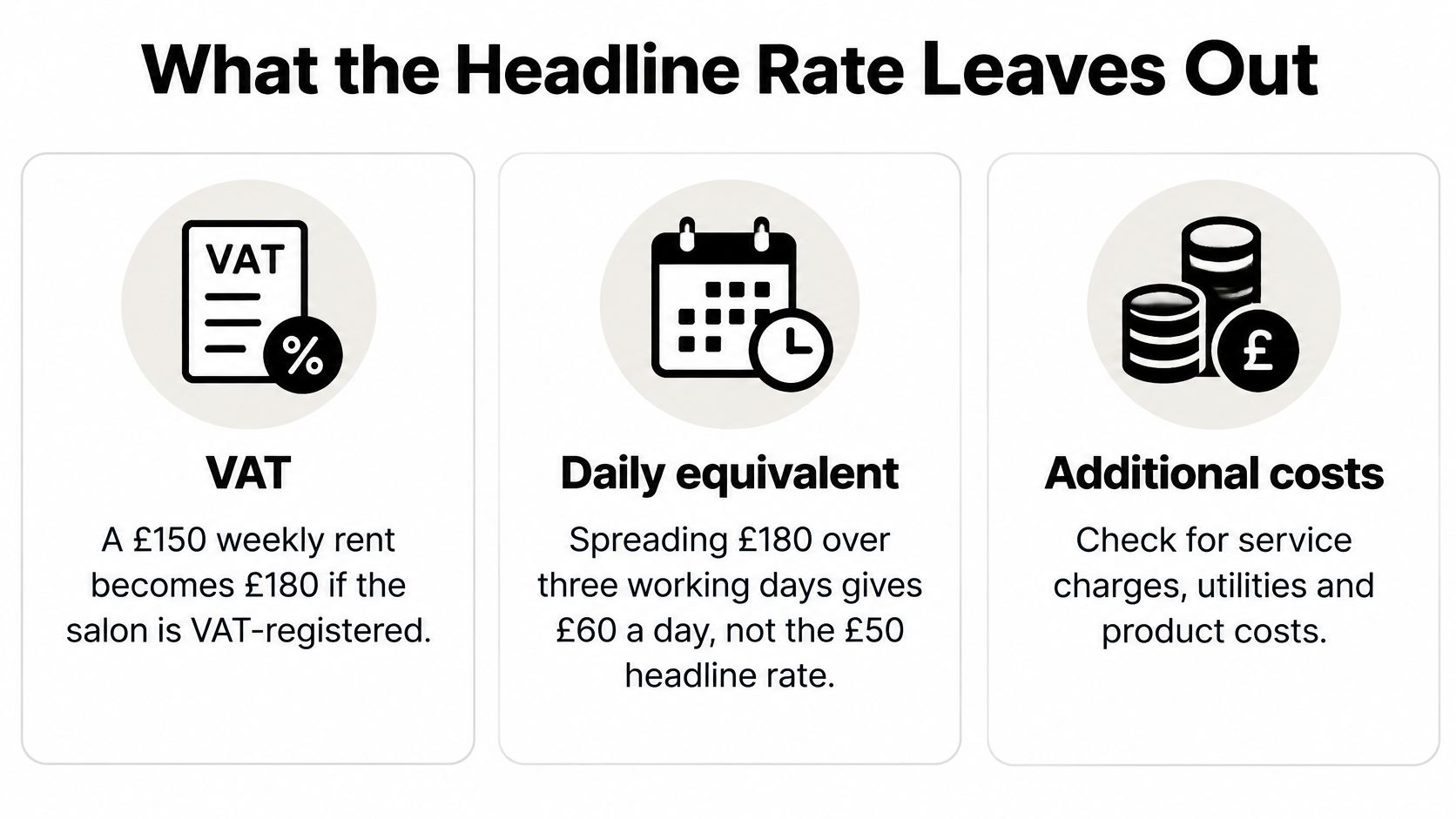
From £150 to £65 a working day
Spread £180 over three working days and the chair is £60 a day, not the £50 you get if you divide the ex-VAT headline by three. Add £15 a week for products and laundry and the week is £195. Across those same three days that is £65 per working day.
What to add before you compare
Build the list from the listing, not from memory.
- Deposit. Often held against damage or a short notice period, and it ties up cash you can't spend on colour.
- Products and consumables. House colour and backbar can be billed on top, or forbidden so you bring your own.
- Towels and laundry. Included in some rents, a per-client charge in others.
- Card fees, insurance and booking software. These sit with you once you're self-employed, even when the chair looks all-in.
- Utilities, Wi-Fi, reception, storage and cleaning. Ask which of these the rent already buys.
Non-working days, cancellations and holidays raise the figure again, because the rent is due whether the chair is booked. A part-time month that looked modest becomes expensive once you only stand behind it for a handful of days. The lowest advertised rent isn't the lowest cost once included services and real utilisation are counted.
Ask the host three things in writing. Is basin use, towels and Wi-Fi inside the rate? Is the figure ex-VAT? What happens to the rent when a client cancels?
Chair Rent Versus a Split or Employed Role
A fixed chair isn't automatically better than a split or a wage. In the NHBF's autumn 2025 industry survey, wages and wage-related costs were 50–75% of total business costs for 51.7% of respondents, 50% of surveyed hair-and-beauty SMEs named energy prices as a major obstacle, and 2025 wage and tax changes were estimated to add about £139 million to sector costs, the NHBF state of the industry report found. Owners under that pressure offer chairs. They also tighten what the rent includes.
| Arrangement | Who carries costs | Income risk | Suits |
|---|---|---|---|
| Fixed chair rent | You, the renter | You carry the full risk of quiet weeks | Steady, full diary |
| Percentage split | Shared with the salon | Shared, with lower fixed outlay | Building a client base |
| Employed | Salon, including wages and tax | Lowest for you | Wanting pay security |
A private room changes the cost stack again, which is why a salon suite rental comparison belongs next to the chair quote, not instead of the diary test below.
Three weeks against a £200 chair
Say the chair is £200 a week, before the extras already counted. Test three diaries and deduct products, cancellations and unpaid time in each.
- Quiet week, £160 of bookings. Rent already exceeds takings. A split would have cost a slice of £160, not a fixed £200. Employment would still have paid you.
- Normal week, £400. After a realistic product and fee slice you may clear more than a 50% split, and more than a junior wage, if cancellations stay low.
- Fully booked week, £650. Fixed rent is the winner. The salon doesn't take a rising share as the book fills.
The break-even is the weekly revenue where rent plus your own costs lands under what a split would take, and under what you'd earn employed for the same hours. Use a realistic average week, not the best week in the book. One full Saturday doesn't carry three empty ones.
Which Rate Suits Which Professional
Match the period to the pattern of work, then ask one question before you agree.

Saturday-only colour work. A day rate covers the Saturday book and leaves weekdays unpaid. Aisha R., a freelance colourist in Birmingham, found a chair for Saturday colour clients because day rates were shown on every listing, and she sorted it in an afternoon without signing up. Ask whether the day rate is for the full day, and whether basin use and towels sit inside it. A half-day price that doubles once foils run past lunch isn't the rate you modelled.
Three-day lash or brow work. A weekly rate matches a steady part-time diary better than four separate day bookings that drift. Work out the weekly cost per booked client before you sign. Ask whether that weekly figure is locked for the term, or whether the host can reprice after a busy month.
A barber building a book. Barber chairs are there for barbers building their own book, and a monthly commitment only makes sense once most working days are already taken. Until then a weekly rate caps the damage at a few days. Ask what notice applies if clients fall away. Listings also cover beauty rooms, treatment rooms, nail stations and studios, so don't pay for a full studio while the book is still a few regulars.
An uneven stylist diary. Start on a day or weekly rate, track bookings for four weeks, and move to monthly only once the average week covers rent plus costs. Ask whether the rate changes when the chair sits empty. Hosts sometimes keep the monthly figure and remove towels or reception once utilisation drops.
Daniel P., a salon owner in Manchester, listed a nail station on the Starter plan and had three enquiries in the first fortnight. Spare capacity moves when the rate and the period are visible.
See how a renter talks through a first week in the chair before you lock a period.
Confirm the Rate and Terms Before You Book
Use this sign-off on every quote. It applies the working-day test to the offer in front of you.
- Match the period to the diary. Write the days you expect to work beside the day, week or month figure. A monthly label means nothing until those days are on the page.
- Work out the cost per working day. Add VAT and the extras that apply to that salon, then divide by the days you'll stand there.
- Compare the two lowest on that figure. Ignore the headline that looks smaller in a different unit.
- Get the terms in writing before you pay. Deposit, notice and what happens to the rent when a booking is cancelled belong in the note, not in a handshake. A salon chair rental contract checklist is the list to walk through with the host.
- Agree the final terms with the host in pounds sterling. Rent is agreed directly between you and the salon. Browsing and messaging are free, and you deal with the salon, not a middle party taking a cut.
You can search by town or postcode, set the listed day, week or month rates side by side, and message the host from the listing. The rule to leave with is simple. Book the period with the lowest cost per working day that matches your diary.
FindMy.beauty lists salon chairs, beauty rooms, treatment rooms, nail stations, barber chairs and studios with day, week and month rates you can compare before you enquire. You search by town or postcode, message the host without an account, and agree the rent with the salon in pounds. If you're pricing a spare chair or hunting one, start at FindMy.beauty.