

You've found a room that looks calm in the photos, and the rate seems manageable. Before you book it for clients, though, you need to know whether it suits your treatment, meets the relevant local requirements and still represents good value once you factor in your working hours and any extra charges.
A massage therapy room is a professional workspace, not just a couch in a quiet room. The right choice lets you work safely and comfortably while giving clients the privacy and access they need. Check the practical details first, then compare the rental terms.
Table of Contents
- Rental Rates for a Massage Therapy Room at a Glance
- Essential Features Every Treatment Room Needs
- Council Rules and Pre-Signing Checks
- Ventilation and Cleaning Routines That Protect Clients
- Accessibility and Privacy Questions to Ask Before Booking
- Agree Terms and Where to Start
Rental Rates for a Massage Therapy Room at a Glance
| Rental option | Typical rate | Source and year |
|---|---|---|
| Hourly, London listing | £16.05 per hour | London massage-room listing, 2026 |
| Hourly, occasional hire | £18–£22 per hour | UK massage-therapy tax guide, 2026 |
| Hourly, Aura-X listing | £25 per hour | Aura-X, 2023 |
| Four-hour half-day | £80 | Aura-X, 2023 |
| Full day, London listing | £69.55 per day | London massage-room listing, 2026 |
| Full day, eight hours | £150 | Aura-X, 2023 |
| Monthly, London listing | £250 per month | London massage-room listing, 2026 |
| Regular monthly arrangement | About £365 per month | UK massage-therapy tax guide, 2026 |
| Two-day weekly package | £840 | Aura-X, 2023 |
These listings show why it's important to compare like with like. The London listing gives hourly, daily and monthly options, while the UK tax guide distinguishes occasional hourly hire from a regular monthly arrangement. Aura-X's rates are from 2023, so treat them as a useful example of package structures, not a promise of what you'll pay now.
Work out your break-even point
Use the £16.05 hourly rate and £250 monthly rate in the London listing for a straightforward comparison. Divide £250 by £16.05 and you get roughly 15.6 hours. In practical terms, paying monthly starts to cost less than paying that hourly rate once you book around 16 hours or more in a month.
For a worked schedule, say you treat for six hours on each of three days a week, across a simple four-week planning month. That's 72 booked hours. At £16.05 per hour, hourly hire would come to £1,155.60, compared with the listed monthly rate of £250. That comparison only helps if the monthly arrangement gives you access for the hours and days you need, so check the booking conditions before treating the figures as equivalent.
The cheapest headline rate isn't always the cheapest room. Ask whether utilities, cleaning, fresh linen and out-of-hours access are included, and whether you pay extra for storing equipment or using the room outside agreed times. Compare the total monthly cost, not just the number in the advert.
If you're weighing different kinds of space, compare therapy-room hire options before contacting hosts. Then use one simple rule: calculate your likely booked hours first and choose the rental term that costs least for that schedule, provided the room also meets your practical requirements.
Essential Features Every Treatment Room Needs
A treatment room should be clean, structurally sound, sufficiently lit and ventilated, with a wash-hand basin supplied with hot and cold water, soap and clean or disposable towels. English local-authority conditions commonly call for non-porous walls, floors, work surfaces and seating, so those surfaces can be cleaned reliably between clients. Ealing Council's special-treatment conditions also say mechanical ventilation must be operational while members of the public are present.
Think of the room like a kitchen. You check that it has running water and washable surfaces before deciding whether the coffee machine looks good. Décor can make a room welcoming, but it can't make up for a basin that's inaccessible or a floor that's difficult to clean.
The profession's history helps explain why a massage therapy room needs to support more than the hands-on technique. The Society of Trained Masseuses was founded in 1894 and introduced qualifying examinations in 1895; massage grew in importance for rehabilitation during and after the First World War, from 1914 to 1918, as described in this history of massage in UK physiotherapy. Modern practice brings together practical treatment and broader therapeutic knowledge, so look for a workspace that supports competent, hygienic care.
Seven essentials to check in person
A usable wash-hand basin. Confirm it has hot and cold water, soap and a way to dry hands. Check where it is, not just whether the host says one is available.
Washable, non-porous finishes. Inspect the floor, work surfaces and seating. These are easier to clean than materials that absorb spills or product residue.
Working mechanical ventilation. Ask the host to switch it on and confirm it operates while clients are in the premises.
Clear working space around the couch. Walk around it from several sides. You need room to move safely and reach the client without squeezing past furniture.
A heating control you can reach. Being able to adjust the temperature helps you respond to a client's comfort without interrupting treatment.
Separate storage for clean and used linen. Clean towels shouldn't sit beside items waiting to be laundered. A cupboard, shelf or clearly divided containers can help maintain that separation.
Enough power sockets. Check that the room can accommodate the equipment you use, such as a lamp, heater or music device, without trailing cables across your working area.
Add comfort after the essentials
A mirror, plants or a sound system can make the room feel more inviting, but they're nice-to-haves, not substitutes for safe working conditions. On a viewing, test every essential yourself and write down any missing feature or agreed remedy before accepting the room.
Council Rules and Pre-Signing Checks
A room that passes one council's checks can fall short of another's. Licensing for massage and special treatments varies across the UK: some councils run a licensing scheme with published premises conditions, while other areas apply different rules. Before you compare rent, find out which system covers the room's postcode.
The table below compares examples from two councils' published guidance. Thurrock's massage and special-treatment licensing guidance sets out premises conditions, while Hillingdon's guidance describes treatment and client-care procedures. "Not stated in guidance reviewed" means the point wasn't specified in the documents described here; other rules may still apply.
| Requirement | Thurrock | Hillingdon |
|---|---|---|
| Minimum treatment room size | At least 5 square metres | Not stated in guidance reviewed |
| Hand-wash basin | Plumbed, with hot and cold water | Handwashing immediately before and after treatment |
| Floors and work surfaces | Impervious and cleanable | Not stated in guidance reviewed |
| Ventilation, lighting and heating | Suitable ventilation, lighting and heating | Not stated in guidance reviewed |
| Toilet access | Nearby toilet access | Not stated in guidance reviewed |
| Client consultation | Not stated in guidance reviewed | First-visit consultation records |
| Couch between clients | Not stated in guidance reviewed | Disinfected between clients |
| Towels | Not stated in guidance reviewed | Laundered to a hygienic standard the council sets |
| Client rest area | Not stated in guidance reviewed | Place to rest after treatment |
Read each row as a question. A requirement missing from one council's column can still apply through other rules in that area, so treat the table as a starting list of things to confirm with the council for the address.
Questions to put to the host before signing
- What's the licensing status? Ask whether the premises or treatment room is licensed where the local council requires it.
- Where's the basin? Confirm it's available to you throughout your working day and suitable for handwashing.
- How does ventilation work? Ask whether it's mechanical or natural and when it operates.
- Who handles laundry? Agree how clean towels are supplied and where used ones go.
- Who cleans the room? Clarify who cleans between clients and what that covers.
- What insurance applies? Ask what cover the host holds and check your own policy for the work you'll perform there.
- How is waste disposed of? Agree where used materials go and who removes them.
- Does the permitted use cover massage? Confirm the host's understanding, and check with the relevant council if anything is unclear.
Get the answers in writing where you can. On FindMy.beauty you can put these questions to a salon before you commit: browsing spaces and messaging hosts is free, the Message host button sends your enquiry straight to the salon, and the rent and terms are agreed directly between you and the host.
Treat the check like renting a flat: confirm the water, wiring and paperwork before you judge the paintwork.
Ventilation and Cleaning Routines That Protect Clients
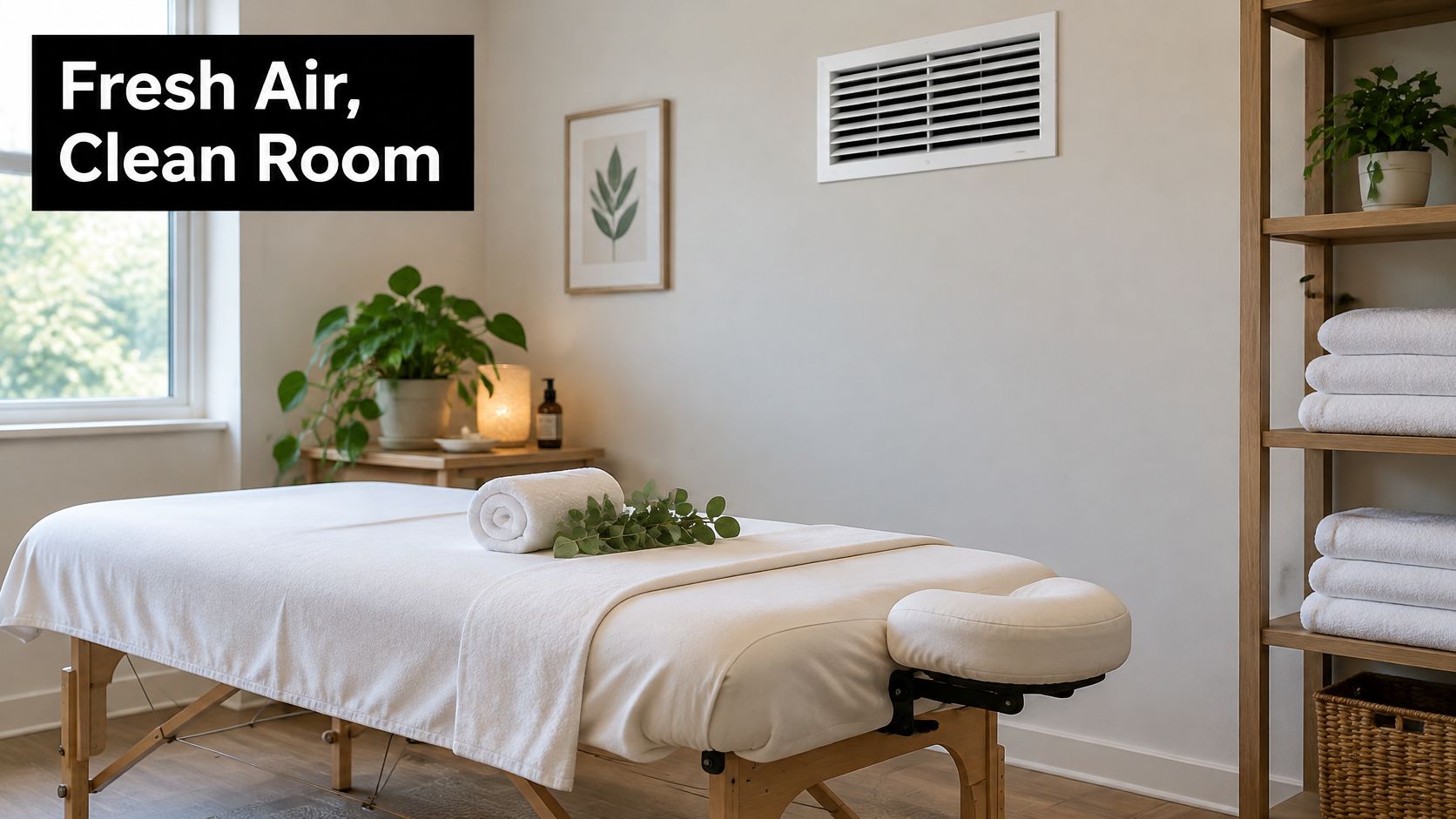
Good environmental control is part of competent body-massage practice, not just a way to make a room feel pleasant. UK occupational standards include suitable conditions for the client and treatment, along with working methods that reduce cross-infection. NHS England's workplace guidance says workplaces need fresh air through windows or powered ventilation, with more ventilation where chemical or respiratory exposure creates additional risk.
Test the room as you'll use it
Ask the host to show you how the window opens or the fan operates. A fan that rattles, barely moves air or is switched off during appointments doesn't give you a reliable setup. Ask whether ventilation runs whenever clients are present, then consider whether the room stays fresh and warm enough throughout a typical appointment.
Airflow shouldn't blow directly across a client who needs to stay warm. Position the couch and your working area so air can circulate without creating a draught or compromising privacy. If the room relies on an opening window, check whether opening it exposes the client to noise, neighbours or views from outside.
Keep clean and used items apart
Plan a simple route for used towels, couch covers and other items that need cleaning. Keep them in a designated container and away from clean linen, oils and other supplies. A room with a basin but no clear place for used items can make hygienic work awkward, so decide where each item goes before your first appointment.
Between clients, follow a consistent routine for cleaning and disinfecting the couch and any work surfaces you've used. Keep the products you need accessible, and follow their instructions for application and contact time. Don't store clean towels on a surface used for oils or other treatment products.
The right setup depends on how you work. Assess:
- Treatment type: Consider the products and techniques you use, including whether they create additional ventilation or cleaning needs.
- Client vulnerability: Think about the needs of the people you treat and whether they may need extra care with airflow, privacy or room temperature.
- Room use: A room used by several practitioners or clients needs a clear shared cleaning and linen routine.
- Product exposure: If you use products that may affect air quality, check whether the existing ventilation is adequate.
A room used for occasional gentle treatments may need a different workflow from one used across a busy day. Set the routine to the treatment, client and actual occupancy, rather than assuming that one cleaning plan suits every space.
Accessibility and Privacy Questions to Ask Before Booking
A luxurious room isn't automatically the better room. A plain space with reliable access, acoustic privacy, adjustable lighting and a clear consent routine can serve clients better than an ornate room with a narrow entrance or little control over the environment. Ealing's special-treatment conditions require suitable screening where more than one person is treated in a room, alongside clean, well-lit and ventilated premises with handwashing facilities, as set out in the council's licensing conditions.
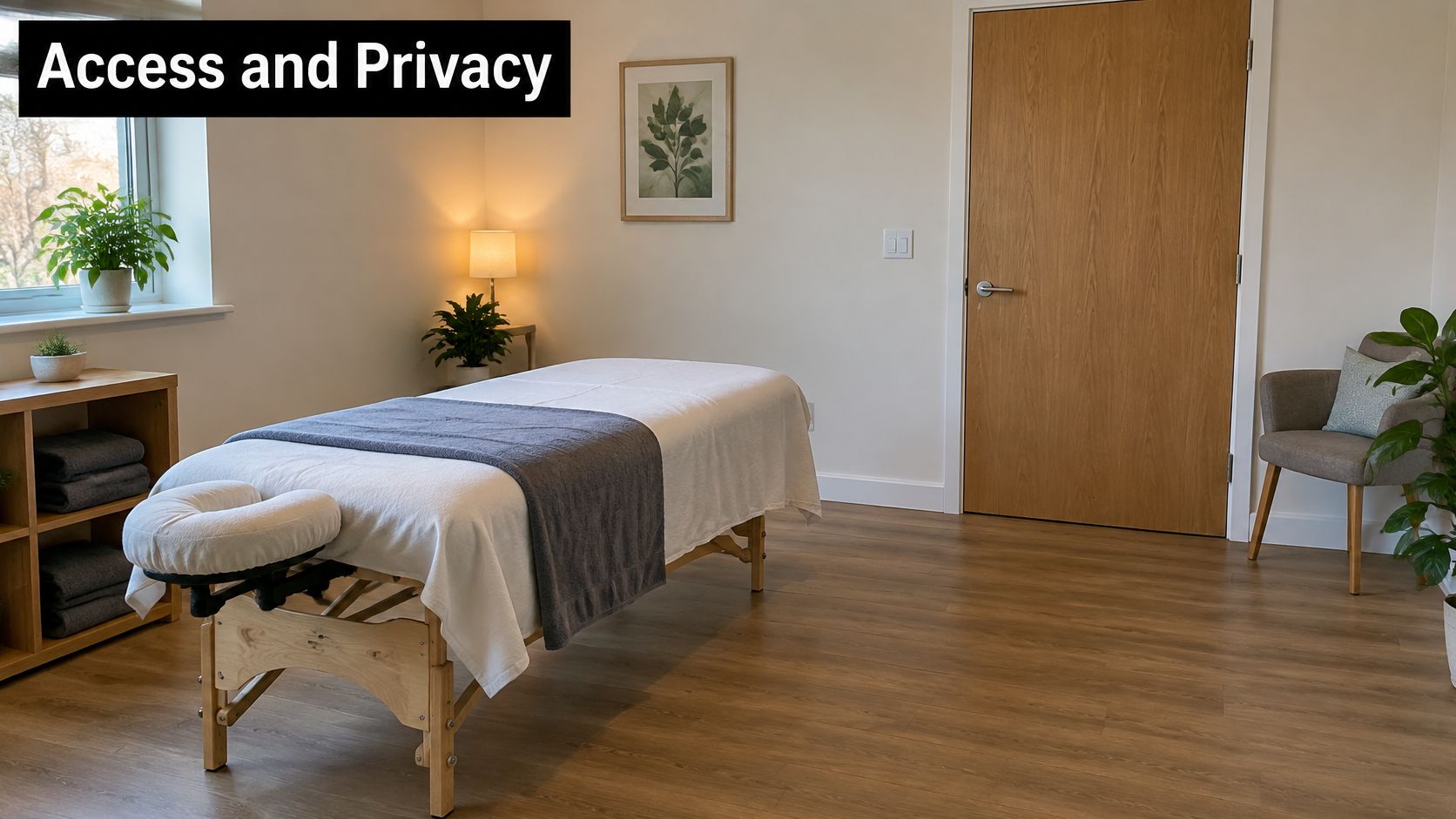
Ask the host direct, practical questions before booking:
- Can a wheelchair user enter, transfer and use the toilet? Ask about steps, door width, thresholds and the route to the facilities.
- Is there clear space around the couch? Check whether a therapist or support person can move safely alongside the client.
- Can the client control the environment? Ask whether they can request changes to music, lighting, draping or the door position.
- Is arrival discreet? Some clients may prefer not to wait in a busy reception or be visible from the street.
- Can you hear the next room? Ask to close the door and listen from inside the treatment space.
- Is suitable screening available? If more than one person may be treated in the room, confirm how the screen provides privacy.
Ask for measurable details rather than accepting vague descriptions such as “spacious” or “private”. A listing that states wheelchair access in plain terms gives you a better starting point than one that leaves you to infer access from photos. Some practitioners also offer home visits for clients who can't reach a room, so consider whether the space you're assessing suits the clients you intend to serve.
If you're comparing local options, browse treatment rooms to rent and use the listing details as a prompt for questions, not as a replacement for checking the room. Ask to visit during a time when the space is in use, so you can test sound and lighting with the door closed and see whether the arrival route feels private.
Agree Terms and Where to Start
Only compare rates once the room has passed your council, hygiene, access and privacy checks. A low price can still be poor value if it excludes cleaning, utilities or access at the times you work. Compare the total cost for your actual schedule, then put the arrangement in writing before you start seeing clients.
Put the practical terms in writing
Agree these points with the host:
- Availability: Confirm the dates and days you can use the room, including any limits on evenings or weekends.
- Price and inclusions: Record the rate and whether it includes utilities, cleaning, linen and out-of-hours access.
- Payment: Agree the payment method and when each payment is due.
- Changes and cancellation: Confirm the notice period for ending or changing the booking.
- Cleaning and waste: State who cleans the room, handles used linen and disposes of waste.
A written agreement helps both sides know what they've accepted. If you're drafting or reviewing terms, use this guide to a salon chair rental contract as a prompt for the details that need recording. The room may be called a treatment room rather than a salon chair, but availability, payment, cleaning and notice arrangements still need to be clear.
Check that your own insurance covers the treatments you plan to provide at that specific premises. Keep copies of the host's written answers and any relevant licensing details, so you can refer to them if the arrangement changes or a question arises. Don't assume a host's insurance covers your practice, clients or equipment.
FindMy.beauty connects beauty professionals with salons that have spare rooms and other workspaces. We show listings with location and rental details, and you can message hosts directly, but the salon and renter agree the dates, payment and conditions between themselves.
Agree the written terms, confirm your insurance and keep the relevant records before paying anything. That way, you're choosing a room that works as a professional base, not just one that looks inviting in a listing.
Browse private treatment rooms and other salon workspaces on FindMy.beauty, where you can compare locations and rental details. Message a host directly about availability, then confirm the room's compliance, access and written terms before booking.