

The UK massage therapy service market generated an estimated US$980.3 million in revenue in 2024, according to Grand View Research. That money moves through treatment rooms, and a fair share of those rooms belong to salons that let them out by the day. Demand isn't usually the problem. The advert is.
A listing that reads "lovely quiet room, message for details" attracts everybody and commits to nothing, so the inbox fills with a nail technician who wants a station and a therapist who only wants Saturdays. When you advertise for massage, the wording does two jobs at once. It pulls in qualified therapists, and it screens out the rest before they ever reply.
That reframing changes what you write. Below is how the channels compare, what a UK advert can legally say, how to write a listing a therapist trusts, how to screen the replies, and how to measure whether any of it worked.
Table of Contents
- Where Massage Practitioners Look and What Each Channel Costs
- What Your Advert Can and Cannot Claim
- Write a Listing Practitioners Trust
- Screen Enquiries for Suitable Practitioners
- Track Enquiries to Know What Works
- Publish Your Massage Room Listing This Week
Where Massage Practitioners Look and What Each Channel Costs
Massage was the UK's most searched spa treatment, averaging 541,891 Google searches per month between April 2024 and March 2025, according to Virgin Experience Days' analysis of Google Keyword Planner data. That figure measures client demand. It tells you a room can be filled. It says nothing about where a therapist looks when they need a room on Tuesdays and Thursdays.
Hosts who confuse those two maps spend money in the wrong place. Client searches justify letting the room. Practitioner searches decide where you post, and the channel you pick is the first filter on who replies.
Busy areas do half the recruiting for you. Where a town supports heavy client bookings, self-employed therapists need rooms close to that work, and a specific listing in the right postcode gets answered. Quieter areas still fill rooms, but the advert has to work harder on what the space offers a practitioner's week.
| Channel | Typical cost | Who it reaches | Main limitation |
|---|---|---|---|
| Google Business Profile | Free | Practitioners searching for a room nearby | Needs accurate details and reviews to rank |
| Local Facebook and Instagram groups | Free | Self-employed therapists in your area | Strict group rules and many spam posts |
| Paid social advertising | Pay per click or impression, capped by the daily budget you set | People targeted by postcode and interest | Cost depends on the budget you set |
| Paid search advertising | Pay per click, with your own bid cap as the ceiling | People typing a room-hire search into Google | Cost per click varies by town |
| Therapist networks and noticeboards | Free to low | Trusted referrals from existing therapists | Slow to fill and hard to track |
| Salon website page | Low, using an existing site | Long-term search visitors | Needs regular traffic before it produces enquiries |
Read the last two columns together when you choose. A noticeboard posting reaches a small pool of therapists already known to each other, which filters for trust but fills slowly. A paid click reaches anyone who typed the search, which fills fast but sends every unsuitable enquiry to your inbox along with the good ones.
Start with the two free channels
Google Business Profile and the local Facebook and Instagram groups cost nothing and reach therapists who already work in your area. Both fail for the same reason: vague entries. A profile with no category, no hours and no photos of the room ranks for nothing, and a group post that says "room available" gets scrolled past.
Search "massage room to rent" with your town name before you write a word. Note which listings appear and what they show you, because that's your competition, not a national brand.
Decide the rent format next, since it shapes the wording and screens replies before they arrive. Our day, week and month pricing reflects how differently therapists rent: a Saturday-only sports therapist, a two-day-a-week practitioner and someone going full-time all read the same room through a different number. Keep daylight photos, the hours the room is free, your rent format and a contact who answers within one working day ready before you publish anywhere.
Add paid search only in a large town, and only once the listing and the price are settled. Paying to send traffic to an unfinished advert wastes the click.
What Your Advert Can and Cannot Claim
Two kinds of sentence sit inside a massage advert, and they carry very different weight. General wording about relaxation, everyday stress, sleep and wellbeing is treated as acceptable promotional language. A statement about what massage does to a named condition is a health claim and needs evidence behind it, as the ASA and CAP guidance on therapies, massage and body work makes clear.
For a room listing, that distinction is your protection. You're describing the space and the service on offer, not promising an outcome for a body. A host who copies a practitioner's cure claims into a room description inherits a problem that was never theirs.
The rules bite hardest on medical territory. CAP Rule 12.2 says practitioners shouldn't advertise diagnosis or treatment for conditions that need medical supervision unless the service runs under a suitably qualified health professional. Words like "relaxation massage" and "stress relief" sit on safe ground. Claims about curing anxiety, chronic pain, depression or injury don't.
| Wording type | Acceptable | Risky |
|---|---|---|
| Treatment name | Relaxation massage | Massage that cures anxiety |
| Everyday stress | Helps relieve everyday stress | Treats depression |
| Sleep | May aid sleep | Cures insomnia |
| Physical comfort | Room suits sports massage sessions | Fixes chronic back pain |
| Wellbeing | Promotes a sense of wellbeing | Clinically proven to heal injuries |
| Credentials | Practitioner holds a Level 3 massage qualification | Doctor-approved therapy |
Testimonials need the same test. A client saying they felt calm afterwards is a sensory description and usually fine. A testimonial containing a factual efficacy statement needs the same documentary support as the claim would in your own words, which is why quoting a review verbatim can land you in more trouble than writing your own line.
A five-step check before anything goes live
- Define the service and the audience. One room, one town, massage therapists.
- Sort experience claims from health claims. "Feels calm after a session" is experience. "Reduces inflammation" is a claim.
- Build an evidence file for every objective claim. Clinical trials on people are generally the expected standard for health-therapy claims.
- Read the wording, photos and testimonials together. A benign caption under a before-and-after photo can build a claim the text never made.
- Keep the file before publication. The advertiser carries the responsibility for holding the substantiation.
Practical rule: if a sentence promises a medical outcome, cut it. Replace it with a description of what happens in the room and who it suits.
Write a Listing Practitioners Trust
"Lovely room available" tells a therapist nothing. They can't tell whether a couch fits, whether they can work Saturdays, or whether £25 a day is rent or a deposit. Most won't reply, and the ones who do will ask five questions you could have answered in the first line.
"Quiet ground-floor room, 3.2m by 2.8m, couch and lockable storage, £25 per day including towels, Tuesday to Saturday" lets them judge the offer in seconds. Here's the room type that gets that kind of response.
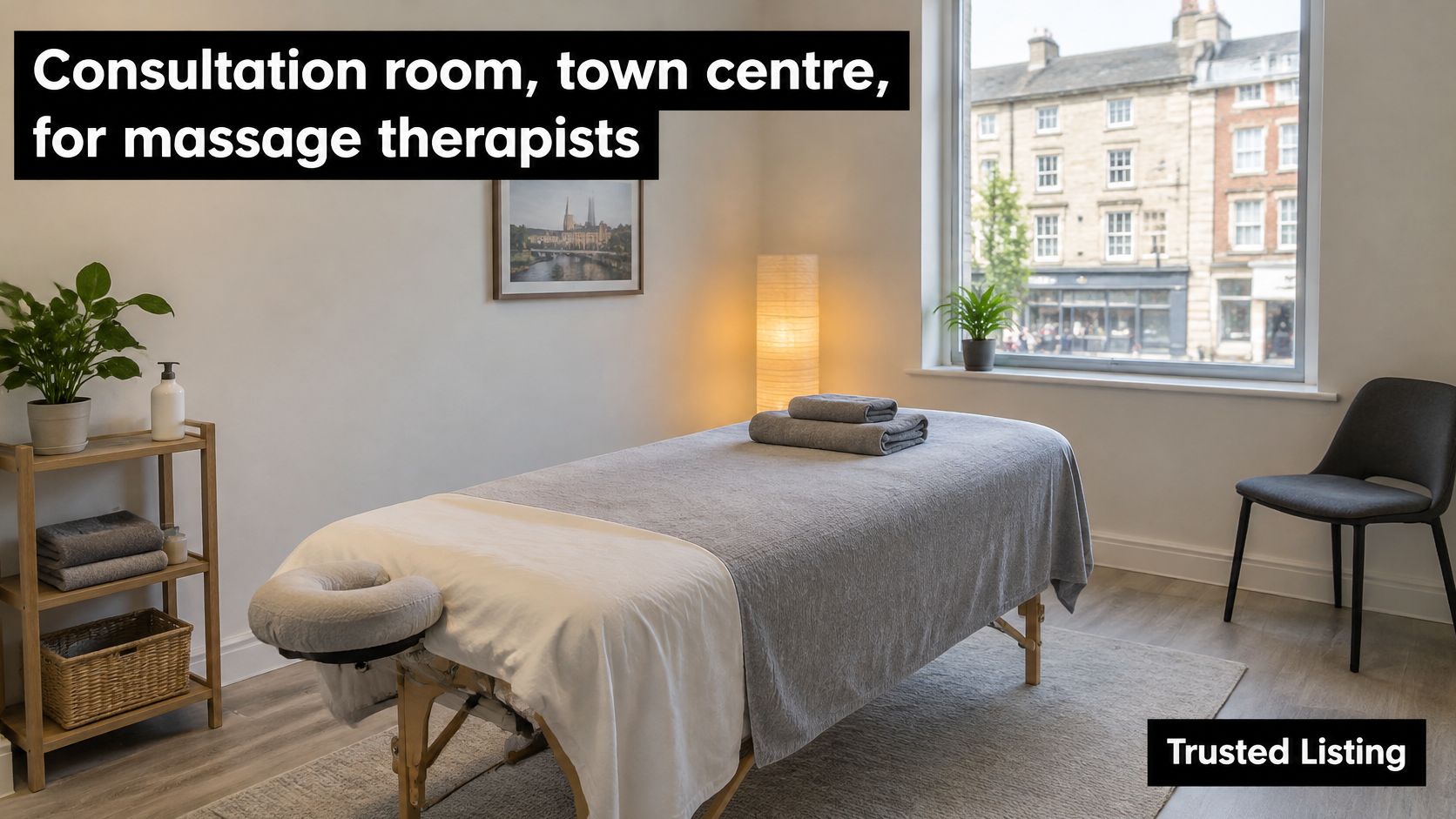
The guidance on health-therapy advertising points to a message order that both ranks well and stays safe: lead with verifiable service details such as massage type, duration, location, practitioner qualification, price and booking availability, then use carefully bounded experiential wording ("supports relaxation", "may aid sleep") afterwards. Under CAP Code Rule 12.1, anything more objective needs strong documentary evidence.
Fields that do the filtering
The headline. Room type, town area, and the words "for massage therapists". Three seconds of reading and the nail technician scrolls on, which is what you want.
The first paragraph. Size in metres, whether the room fits a massage table, hot stones or just a couch, the access hours, the floor level and where people park. Therapists decide on floor level faster than you'd expect if they carry a table.
What's included. List it plainly: couch or table with bolsters, a sink, lockable storage, heating you control, a music system or speaker, and what the practitioner brings themselves such as oils, towels and linen. Ambiguity about towels is the single most common cause of a second enquiry.
The rent, in the format you charge. Day, week or month, the exact figure, and whether utilities, cleaning and laundry sit inside it.
The qualification and cover you require. Say it in the listing: a Level 3 massage qualification and current professional indemnity insurance. Naming the bar is a filter in itself, and it saves the awkward conversation later.
Who handles client bookings. If you take calls for the room, say so. If the therapist takes their own bookings and pays you rent, say that instead. Practitioners have been burned by unclear splits and they read for it.
Photos that prevent a wasted viewing
Shoot in daylight with the couch made up, surfaces clear and no clients visible anywhere in frame. Show the door, the sink and the storage, because those are the three things a therapist checks on arrival. A wide shot of the room beats six artistic close-ups of folded towels.
For more on what makes a treatment room lettable rather than merely available, our guide to the massage therapy room covers the physical setup in detail.
Screen Enquiries for Suitable Practitioners
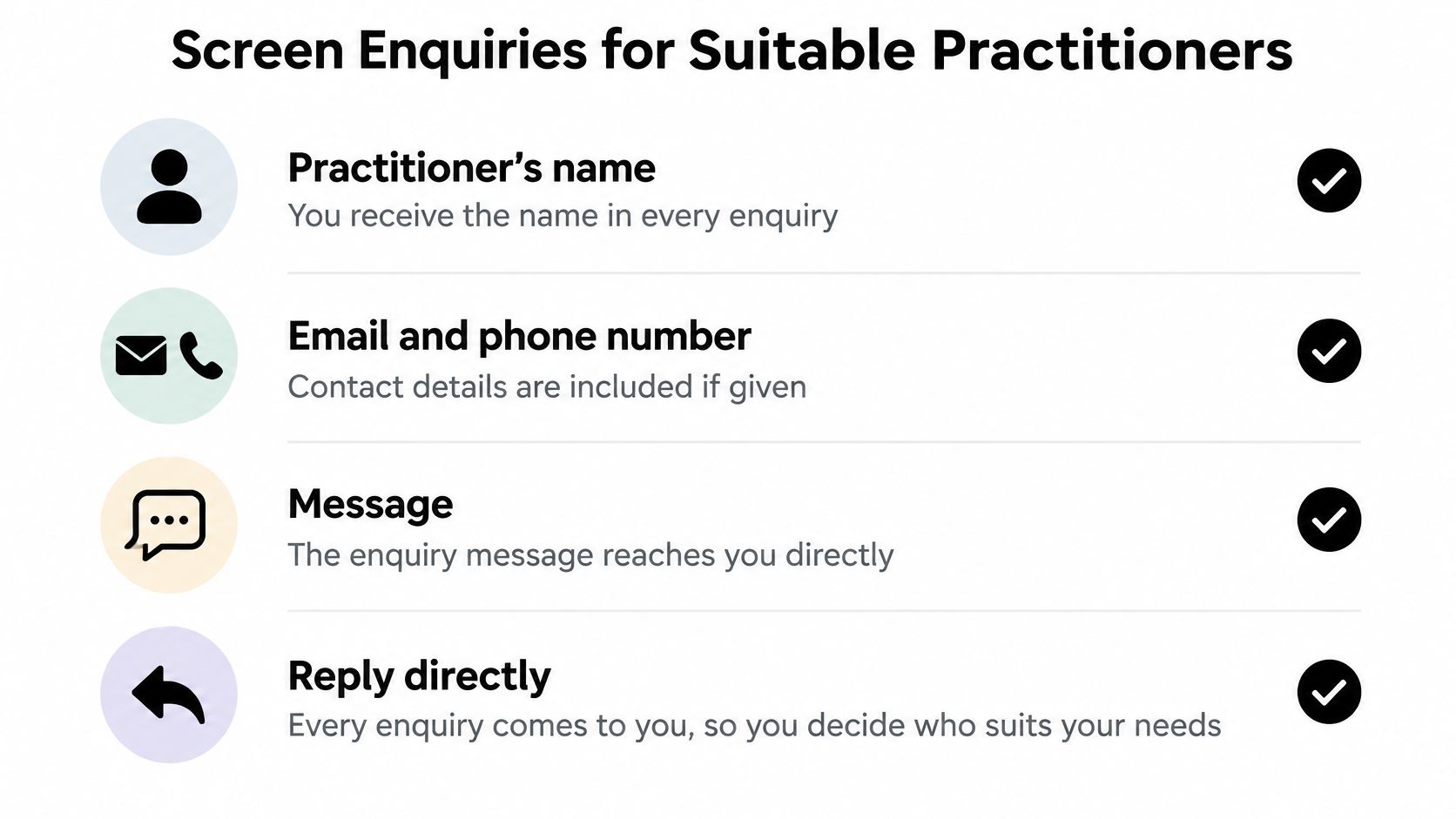
Enquiries arrive with the practitioner's name, email address, phone number if they gave one, and their message, so you can reply to them directly rather than through a chain of platform notifications. Every enquiry comes to you, which means you decide who suits your space and your existing clients. Nobody gets assigned to your room automatically.
That control is worth using properly. A fast, structured reply does more than answer a question. It tells the therapist how you run the building, and the good ones read that as a signal.
Five steps, each with a reason
- Reply within one working day with the rent, availability and room access. Therapists enquire to several rooms at once. The first clear answer usually wins the viewing, and a slow reply reads as an unreliable landlord.
- Ask for the qualification and the insurance certificate. A photo of the certificate on a phone is fine. You want the expiry date on the insurance, not just the document.
- Ask which treatments they offer and how they describe them in their own marketing. Read the answer, not just the list. Someone promoting "treatment for chronic pain" is bringing a claims problem into your building, and your address appears on their material.
- Ask how they handle client bookings and whether they've rented a room before. A first-timer needs more support on access and keys. That's manageable if you know it in advance.
- Check the fit with the practitioners already in the building. Overlapping hours in a shared waiting area, competing specialisms two doors apart and noise through a partition are all real problems. So is a therapist who wants the room at the exact hours your busiest tenant needs it.
What to do when an enquiry looks wrong
Four signals should slow you down.
- Vague or missing qualifications. "I've been doing this for years" isn't a Level 3 certificate.
- A request for free trial sessions. Being asked to work a day for nothing before paying rent is a warning about how the rest of the arrangement will go.
- Pressure to pay without written terms. Rent, deposit, notice and access in writing, before any money moves.
- Marketing that promises cures. You don't want that language attached to your postcode.
Before the first session, put the arrangement in writing: the rent figure and whether it's daily, weekly or monthly, what the deposit covers, the notice period, key and access hours, who takes client bookings, and the requirement that professional indemnity insurance stays current. The agreement is between you and the practitioner. FindMy.beauty provides the listing and messaging only and isn't a party to it, doesn't handle rent or deposits, and doesn't arbitrate a dispute about either.
Track Enquiries to Know What Works
Treat each advert as a local funnel rather than a view counter. Views feel good. They don't pay for the room. What matters is which channel, which headline and which price format produced the practitioner who signed, and you can only answer that if you count each stage separately.
The loop, in order
- Build a separate audience for each postcode or town. One combined "Manchester and surrounding areas" advert tells you nothing about either.
- Use one listing per service and location. A room marketed as a massage room and a general beauty room muddles the data and the reader.
- Record five numbers: advert views, listing clicks, enquiry starts, completed enquiries and booked rentals.
- Calculate conversion at each stage. The drop between clicks and enquiry starts usually points at price or availability wording. The drop between enquiries and bookings usually points at the reply, not the advert.
- Pause whatever produces lots of enquiries and poor applicants. Volume without fit costs you time.
There's no reliable UK-wide benchmark for massage-room advertising conversion, and I'd be suspicious of anyone quoting one. Set your own baseline from the first 30 to 50 qualified enquiries, then compare later versions against it. A qualified enquiry means someone who can use the room at the hours it's free and holds the cover you asked for. Anything weaker inflates your numbers and flatters a channel that isn't working.
One worked comparison
Say forty enquiries from a paid social campaign produce one rental, while three noticeboard enquiries produce one. The noticeboard wins on cost per rental by a wide margin. The answer isn't to cancel social, it's to rewrite the headline and the opening line of that listing, then run it again before adding budget. Change one variable at a time: headline, photo, rent format or call to action. Change two and you learn nothing.
Keep the records simple. A spreadsheet with a row per enquiry, a column for the channel it came through and a column for how it ended is enough. The pattern shows itself within a month.
Cost per qualified enquiry and the share of enquiries that become rentals are the only two numbers that decide where next month's effort goes.
Review on a schedule tied to enquiry volume, not to a quiet week. If a channel goes three weeks without a qualified enquiry, it's telling you something. If it produces two in a fortnight, keep it running and leave it alone.
Publish Your Massage Room Listing This Week
The order matters. Finish the listing text and the claim check first, because publishing a price and a description you then rewrite splits your enquiries across two versions and teaches you nothing.
- Create the listing and upload the daylight photos. Room, door, sink, storage. No clients in frame.
- Set the price as a day, week or month figure that matches the listing. Whatever you wrote in the advert is what appears.
- Post that same offer, unchanged, on the two local channels you chose. A different headline on Facebook and a different rate on the noticeboard is how hosts end up with two kinds of enquiry and no way to compare them.
- Turn on enquiry notifications. A reply within one working day is the standard you set in the advert, so meet it.
Listing a space is free to start, and no commission is taken on rent paid through the site. The Starter plan at £4.99 per month covers one listing, unlimited enquiries from therapists and a photo gallery with day, week or month pricing. The platform supplies the listing and the messaging. It isn't a party to the rental agreement, so terms, deposits and access stay between you and the therapist.
Once an enquiry clears screening, send the written terms before the first session and file a copy with the enquiry record. That file is what lets you answer a question about hours or notice three months later without reconstructing the conversation from memory.
If you're weighing up which space to market first, the process for renting out your salon chair follows the same logic and is worth reading alongside this one.
A clear, claim-safe listing and a fast, screened reply fill a room more reliably than a louder advert ever will.
FindMy.beauty lists private treatment rooms, salon chairs and studios by location, with day, week or month rates shown before anyone gets in touch, and every enquiry lands with you to answer. If you have a room sitting empty between appointments, you can write the listing with the detail that filters as well as attracts, then see which therapists reply. Visit FindMy.beauty to list your space this week.